

About Us
Major responsibilities of each Division
Evaluation Supervisor
Provides overall coordination concerning the evaluation for the registration of agricultural chemicals, and the improvement of assessment methodologies for agricultural chemicals, based on the latest scientific knowledge and information and global developments in the regulation of agricultural chemicals.
Operation and Strategy Division
Provide managerial services related to internal control within FAMIC, including setting operational goals and monitoring achievements. Also conducts customer surveys and public relations concerning the registration of agricultural chemicals, maintenance of analytical instruments and chemical substances, and oversees various surveys and researches conducted by other divisions with a view to strengthen scientific bases of evaluations.
GLP Monitoring Division
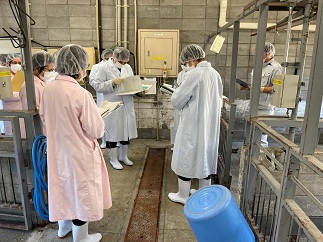
On-site inspection at a test facility
Conducts laboratory inspections and study audits in test facilities carrying out studies to be submitted for the registration of agricultural chemicals, with a view to monitoring their compliance with the OECD Principles of Good Laboratory Practice (GLP), Also acts as the contact point of the GLP compliance program on agricultural chemicals in Japan, for the correspondence and coordination with other GLP monitoring authorities in Japan and the OECD Secretariat.
Operator Safety Evaluation Division

Review of the toxicological study reports submitted by the applicant
Determines if the agricultural chemical under evaluation is safe for its operators, based on the results of various toxicity tests (e.g. acute toxicity, eye and skin irritation, skin sensitization, chronic toxicity, carcinogenicity, reproduction toxicity, developmental toxicity and genotoxicity), along with proposed use instructions and precautionary statements including recommended personal protective equipment.
Ecological Effects Evaluation Division

Test organisms for tests of the effects on various organisms
Using results from ecotoxicological studies including honeybees, silkworms, and environment flora and fauna (aquatic�Ffish, Daphnia, algae, ; terrestrial�Fbirds and wild bees), as well as predicted environmental concentrations (PEC), we evaluate the safety of pesticides for these non-target organism. Based on evaluation appropriate use the methods and precautions on labels established to prevent adverse effects. In addition, research and studies are conducted to contribute to the improvement of review strategies related to ecotoxicity.
Quality Evaluation Division
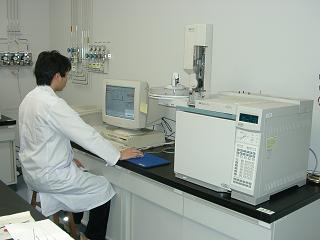
Active ingredients analysis in end-use-product by GC
Determines if the identity of the agricultural chemical under evaluation, such as composition, chemical name of the active ingredient, physical and chemical properties of the formulation (e.g. stability, suspensibility and particle size) is properly reported. Also, makes sure that the content of the active ingredient in the formulation can be determined with the proposed analytical methods, which will be used in analyzing the samples collected during on-site inspections of the manufacturer after the agricultural chemical is placed on the market.
Efficacy and Biopesticide Evaluation Division
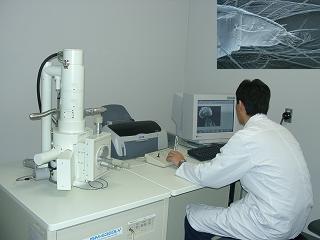
Identification of natural enemy using scanning electron microscope
We determine proper application methods of pesticides through evaluating efficacy against pest and phytotoxicity to crops. In case of biopesticides, we also evaluate safety for operators and non-target organisms. Furthermore, we use bioassays such as potency tests to inspect active ingredients of biopesticides which are submitted as samples, or which are collected as market items.
Environmental Behaviour Evaluation Division

Agricultural chemical residue analysis in soil (left picture)
Based on the tests of behavior in soil/water, residues in soil, water pollution and other related tests, as well as predicted environmental concentrations (PEC) on water pollution, the appropriate application methods of agricultural chemical and precautions will be determined to prevent succeeding crops pollution and causing adverse health effects via ingestion of river water. Additionally, research is conducted to improve examination techniques related to environmental behaviour assessment.
Residue Evaluation Division

Agricultural chemical residue analysis in crop
Determines if the residues in or on crops of the agricultural chemical under evaluation would not cause adverse health effects when ingested directly or via products derived from livestock fed with the crops. Evaluation is based on residue chemistry such as metabolism in plants and livestock and residues in crops and livestock, along with proposed use instructions and any relevant precautionary statements.
Registration Division
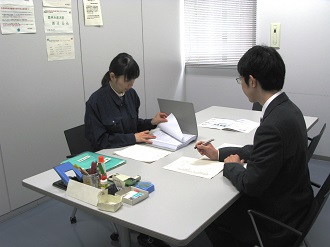
Receipt of registration application form
Manages the applications for the registration of agricultural chemicals, acting as coordinator between specialized evaluation divisions, applicants and MAFF and maintaining the data and information of registered agricultural chemicals. Also plans and oversees on-site inspections of manufacturers of agricultural chemicals for reporting to MAFF.
Residues Analysis Division
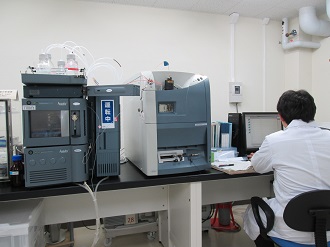
Conducts a survey to monitor the use of registered agricultural chemicals and their residues in or on crops in order to confirm that maximum residue limits are not exceeded when agricultural chemicals are used in accordance with good agricultural practice, namely, following use instructions and taking account of precautionary statements. Further, also conducts a same survey to check organic crops in order to confirm their compliance with the Japanese Agricultural Standard for Organic Products of Plant Origin.
International Coordinator
Provide coordination concerning the handling/responding for participation in international meetings and searching for overseas information on pesticides in order to contribute to the international harmonization of pesticide registration system.
